Facebook starts a new advertising format that focuses on the “check-ins” and “likes” of Facebook users, and thus their friends. The new commercial product uses the traditional business or product recommendations that can be seen in other ad formats of the company.
Facebook calls the new advertising model Sponsored Stories (watch the descriptive video). It gives marketers the option to identify activities that members to target those peoples’ friends. The Facebook News Feed becomes the driver of the acitivity. Companies and brands can feature these activities via check-ins, custom applications and page posts (i.e. discount offers) in a column on the right members’ friends.
Sponsored Stories highlight the actions of friends while giving advertisers no control over messages. So, it is not a straight forward promotion but all advertising may be considered by viewers as company or product recommendations. However, it is not the companies that know where the advertsing goes but the users with their activities.
Compared to Twitter and their Promoted Tweets this is a new approach. Promoted Tweets focusses specific tweets tied to keywords which gives advertisers full control over their commercial messages. Facebook Sponsored Stories are following a bidding system. Slots are on a per-impression and per-click basis.
Spot On!
In my eyes, this is aclever approach to use the activities of Facebook users to generate revenue. The only question stays if the users want to have their face and name used for commercial formats of this kind. What if a user doens’t want to be “used” for commercial purposes of brands? It suggest that users need to have the option to turn this commercial feature off. And I can imagine that some will be saying “And where is my rev share?”
What comes up to your mind when you think about it? Join the conversation…
https://thestrategyweb.com/wp-content/uploads/2017/11/strategywebLogo-300x139.png00The Strategy Webhttps://thestrategyweb.com/wp-content/uploads/2017/11/strategywebLogo-300x139.pngThe Strategy Web2011-01-31 09:50:022011-01-31 09:50:02Facebook starts Sponsored Stories – New ad model
Yesterday, I came across a good post by Adam Singer that inspired me (as well as his comment to my comment) to finally explore a bit on the phrase: “evolution by revolution”. I don’t know whether this phrase is new, or invented by me but I would love to claim it as my invention. And as Google did not have any results on the phrase for me, I herewith put my trademark behind the phrase – maybe to make a case… “evolution by revolution”.
The phrase is one of these thesis I use for educational courses to discuss and leverage a modern social web world approach with C-level management teams in Europe. I have used it in many seminar or webinars when I was talking about the change management challenges that the Social Web, Social Networks and Social Media bring to live these days.
In the past of human kind, revolutions were often a way for the lower class or segments/departments in an organization to state their case. For them, the challenge to be heard, to get access to the higher education, to have enough food or to benefit from any other kind of wellness or upper (business) lifestyle was often only accessable by a revolution. Revolutions cost money. Revolutions are tough. Revolutions sometimes make sacrifices. Revolutions change habits, perspectives and … business objectives. And revolutions always happened publicly – via newspapers, magazines or even flyers in the streets.
Today revolutions spread faster. In our social web world today, the traditional print media opportunities are added (or replaced?) by new media formats that every individual can use to state their case. And sometimes it “pisses people off” as Adam would have put it. But it makes the case of the unhappy, unsatisfied and underdogs. Suddenly, somebody writes something that is not mainstream, not the evolution strategy of the leadership but becomes the new revolutionary fruits of growth for the management if these people listen, communicate and collaborate, if they pay attention – whether it be the clients, the partners or even employees that start the revolution.
Their voice might be found on all kinds of platforms, in a tiny revolutionary statement in a blog post, a comment in a LinkedIn group (think about the impact for B2B business) or in a Facebook fanpage. Think about it! No! Think about it! Rest…
Some companies put all their PR & marketing budgets in the effciency of search marketing but then forget about the power of blog posts, and what it could do to them. They don’t think of it as negative cases. Think positive! Think ahead! Think about how to leverage the power of social options!
Spot On!
This modern world of communication is all about humans – the past, the present and the future. Evolution follows every revolution (…in my eyes). Consumer or end user buzz for positive and negative business impact always starts an evolution whilst being embraced as revolution first. It changes the mindset. And evolutions can be positive and negative. It needs to be seen as a turn around opportunity, as a business review option, and as a way to think ahead to prevent revolutions.
“Evolution by Revolution” is a (business) challenge – not a phrase! C-level management should forget that… That’s my case!
What’s yours on this topic…?
https://thestrategyweb.com/wp-content/uploads/2017/11/strategywebLogo-300x139.png00The Strategy Webhttps://thestrategyweb.com/wp-content/uploads/2017/11/strategywebLogo-300x139.pngThe Strategy Web2011-01-21 03:17:462011-01-21 03:17:46Evolution by Revolution – a phrase or a case?
The latest market outlook by Deloittepredicts that in 2011 social networks are likely to surpass one billion unique members and may deliver over 2 trillion advertisements. Although this sounds impressive, it is modest compared to other media, the CPM remains low and the market share remains at only 1% of the global online ad spend. The per member annual advertising revenue is approximately $4 which implies total 2011 advertising revenues of about $5 billion.
Will the publishing industry see a revival of print again? Everybody says social media is challening the print publishing industry. All of a sudden, the Content Marketing Institute has launched a media that is in some way a spin-off of the modern social web development, Chief Content Officer. The circulation is 20,000 marketers, with additional digital distribution. Yes, obviously there is a “digital spin” off as well…
Nike signed a big sponsoring agreement with the national football association of France (FFF). After years with Adidas, France signed a contract with Nike for their national football dress. And then they did this fantastic commercial with reference to my most admired work and poem from “Cyrano de Bergerac”, ending with the famous words “J’ai touche!”. Let’s wait and see what the French team will touch us in EURO 2012…
PS: At Starbucks mobile payment becomes reality. At least in the US where you can swipe your phone in front of a scanner that is checking your Starbucks account.
https://thestrategyweb.com/wp-content/uploads/2017/11/strategywebLogo-300x139.png00The Strategy Webhttps://thestrategyweb.com/wp-content/uploads/2017/11/strategywebLogo-300x139.pngThe Strategy Web2011-01-20 08:39:172018-01-26 11:56:05News Update – Best of the Day
Do bank customers want ads in their checking accounts? Whether or not we like it, banks think about ways for new monetization opportunities but also try to strengthen loyalty programs of other companies. The big alignment of the industry and the end of the plastic loyalty card? Banks just ad links to the last transaction and you get the voucher for some benefit at the next check-in.
Apple released some numbers that every iPhone user has approximately 60 apps on their device which sums up in 10 Billion app downloads from their store. It took Apple 31 month compared to 67 month to sell the same amount of iTunes songs.
In their latest commercial, MINI battles vs. five-ton monster truck. Can a monster truck jump really clear the whole MINI family becomes the question? And just watch the feelings and what happens to those who watch the challenge. Can love be described better?
https://thestrategyweb.com/wp-content/uploads/2017/11/strategywebLogo-300x139.png00The Strategy Webhttps://thestrategyweb.com/wp-content/uploads/2017/11/strategywebLogo-300x139.pngThe Strategy Web2011-01-18 14:00:312018-01-26 11:56:05News Update – Best of the Day
John Hernandez is General Manager of the Customer Collaboration Business Unit (CCBU) at Cisco, which provides contact center and interactive voice applications to enterprises and service providers. In this capacity he oversees product and market development, and is closely involved in the business with the Cisco sales force and partners.
The Strategy Web spoke with him about the launch and benefits of their new customer care product SocialMiner.
What were Cisco’s most successful social medias tactics in the last 2 years? How did Cisco came across the new solution SocialMiner? Why is social media monitoring so important from a strategic point of view for businesses?
Cisco is very active in social media. Our employees were some of the earliest adopters of Myspace, Twitter, Facebook, YouTube, and other social sites. We have tens of thousands of active social media users in our company, as well as a robust and vibrant corporate presence on the social web.
Social media monitoring can become a key strategic advantage for businesses. From a contact center perspective, social media could be treated as “just another channel” in a multichannel approach. However, the public nature of social media, along with the sheer volume of social media postings, makes social media as much a business intelligence tool as a new way to engage with customers. Cisco believes that proactive social media customer care will have a transformative impact on how companies engage and serve their customers.
The concept of the SocialMiner product came from our observation of the changing communication habits and Internet usage of consumers. As consumers have adopted social media channels for their individual communications on an ever-increasing basis over the past couple years, it is only natural that they would consider interacting with a business via social media. This concept of social impacting customer relationships is a very active topic within the emerging “Social CRM” community.
Is SocialMiner just a Customer Service product? Bearing in mind that social conversations on the web affects the whole business…
Cisco SocialMiner is an engagement product, not a “listening product.” SocialMiner is designed to scale the quality and quantity of social media interactions performed by a business. SocialMiner can be used for a variety of business functions such as Support or Sales, but we believe the customers that derive the most value from social media will also use these engagements to drive business process change. For example, an organization could use SocialMiner as a source of business intelligence to provide real-time customer appreciation or criticism of a product or service (or of a competitors’ product/service). Social media can direct their business strategy. Cisco believes that companies that learn from social media will become closer to meeting their customers’ expectations and this will drive overall business success.
Which three benefits do business users have using SocialMiner compared to other tools in the market (Radian6, Alterian, etc.)
1. Cisco SocialMiner is complementary to brand monitoring dashboard solutions. It is designed to support scaling social media by leveraging the best practices from contact center type operational models: Queuing, Service Level Metrics (Average Speed of Answer), and productivity metrics for users. By contrast, many of the brand monitoring dashboards have pieces of workflow capability, but these capabilities are either relatively limited or recently introduced functions.
2. Cisco SocialMiner is a component of the Cisco contact center portfolio which currently includes an installed base of over 10,000 customers. SocialMiner is packaged, priced, and delivered along with Cisco Unified Contact Center Express and Cisco Unified Contact Center Enterprise solutions, and therefore it supports the same installation, deployment, serviceability, and user experience as these other Cisco collaboration solutions.
3. Cisco SocialMiner is a very easy to install and operate software appliance. It runs on premise or in a customer controlled data-center hosting facility and offers unlimited capture capability. Cisco SocialMiner is an API-first product with 100% of functionality available via REST API’s and all user interface delivered as OpenSocial gadgets with documented source that can be modified by Cisco channel or customers. This model supports the preferred consumption model of most enterprise organizations along with a broad customization capability.
Can it be used as a stand-alone product or only in combination with other Cisco products for customer service? Do you have any case studies of success?
Cisco SocialMiner can be used as a stand-alone solution. We have several case studies that illustrate SocialMiner’s success. Zone Labs is one of them. The small wellness company was looking to accelerate revenues & grow 1000% in next 3 years, implemented Cisco SocialMiner to increase customer engagement, customer satisfaction and sales. Zone Labs started developing social communities on their own website as well as Facebook, Twitter and other social media outlets. They used Cisco SocialMiner to route and queue contacts to experts within their organization.
Using SocialMiner, experts were able to proactively answer health and wellness questions via Twitter, providing encouragement to consumers on the Zone Diet, customer service and expert advice on questions such as vitamins and healthy recipes. Zone Labs saw improved agent productivity by automating capturing and responding to social media posts (currently estimated at ~10x). They gained greater customer satisfaction & brand mind-share from faster first inquiry resolution on the web, and were able to compete on comparable scale with larger companies. Their social media activity reduced their customer acquisition cost and created a larger funnel with more leads, that were converted more easily and more quickly than before.
Within 4 months of using SocialMiner, Zone Labs saw tremendous results:
– Web site transactions up 189%
– Revenue up 203%
– 202% increase in total visitors to www.zonediet.com
Thank you for your time, John. And by the way: I like your commercial for the product…
https://thestrategyweb.com/wp-content/uploads/2017/11/strategywebLogo-300x139.png00The Strategy Webhttps://thestrategyweb.com/wp-content/uploads/2017/11/strategywebLogo-300x139.pngThe Strategy Web2011-01-14 08:54:082018-01-26 11:56:05How Cisco's SocialMiner helps improve the conversation with customers (a John Hernandez interview)
The World Economic Forum will host its annual meeting in Davos from 26-30th of January 2011. Year on year prominent business people and politicians discuss at the event the state of the world from economics to political issues up to environment topics. In 2008, I have written about the first Social Media approach of the WEF. It became the most read blog post until today, probably as of the event’s popularity.
At the end of last year, I met Matthias Lüfkens at the LeWeb10 in Paris and I wanted to get some input on their Social Media learnings.
About two years ago, I have written about the World Economic Forum and your open social web-strategy. How do you think about your approach in 2008 today?
I think it was the right decision to engage the World Economic Forum on social networks. We are present on the key networks and now have 15.000 fans on Facebook, 13.000 subscribers on YouTube and 1.4 million followers on Twitter. We have shown that our engagement on social networks was not a short-lived PR operation but is a continuous effort to participate in the conversation.
What are the main achievements of your social web activities?
Beyond the number of friends, fans and followers the main achievement is to have given the general public a voice in the Forum. For three years running we have invited citizen journalists to attend our meetings. In 2010 Julia Lalla-Maharajh from the Orchid Project won the YouTube contest and had her own panel in the programme addressing her cause, the fight against female genital mutilation.
Where do you see the difference between PR people and bloggers from today’s point of view?
Social Media has blurred the lines between bloggers and PR people. Today anyone can have his voice heard through blogging or micro-blogging: the consumer, the blogger, the PR representative but also the CEO directly. If there is citizen journalism, there must also be room for CEO journalism, a new more transparent and engaging form of public relations.
What will be your highlights of the WEF 2011?
My highlight is to see how much Social Media has become part and parcel of our events. At the Social Media Corner participants are encouraged to reply to questions on YouTube and Facebook. Many are actively using Twitter to share their thoughts about the meeting. It will be interesting to see how many will check in on Facebook Places and Foursquare.
What is the value of the social web and active social medians for an event like the World Economic Forum?
Social Media has opened up the World Economic Forum events. We have effectively created a two-way direct dialogue between our participants and the general public.
Thank you for your time, Matthias!
https://thestrategyweb.com/wp-content/uploads/2017/11/strategywebLogo-300x139.png00The Strategy Webhttps://thestrategyweb.com/wp-content/uploads/2017/11/strategywebLogo-300x139.pngThe Strategy Web2011-01-12 09:08:552018-01-26 11:56:05"We have effectively created a two-way direct dialogue" – World Economic Forum & Social Media
Early adopters show big interest (see study) in location-based platforms like Gowalla, Foursquare or Groupon and obviously Facebook Places. Though only 4% of the US internet users use it, and probably the number is even lower in Europe. Nevertheless, Check-Ins could become the pull mechanism for offers on location-based direct marketing campaign in the future.
However, the check-in technology is still not completely evolved. People can still log-on from places around a building (though often not in the building…) -like we check-in on our airlines for flights today from all over the world- and still earn their “check-in credits”.
Some months ago, I wrote about loyalty cards and how the intelligent use of Social Media at point of sales, i.e. cash points at retailers or in shops, could make our purse loose some “plastic weight”, and make loyalty cards a thing of the past.
Now, combine this thought with the new location-based technology and think where we could be if these platforms could embed loyalty programs in their technology/apps. Automated check-in via apps. No second hand-over from loyalty plastic cards. Quicker engagement and upsale opportunities for companies and brands. Brave new world!?
This presentation by the DASH7 Alliance looks at the state of location-based check-ins in the past, today and the need for a global standard for check-ins (and check-outs) in the future.
https://thestrategyweb.com/wp-content/uploads/2017/11/strategywebLogo-300x139.png00The Strategy Webhttps://thestrategyweb.com/wp-content/uploads/2017/11/strategywebLogo-300x139.pngThe Strategy Web2011-01-11 18:30:432018-01-26 11:56:05Why Check-Ins need to improve in the future…
When I first came across the KLM Surprise idea, I thought “cool customer service”, “very modern approach” and “nice use of a Social Media campaign”. It seems KLM engages in how to make their clients happy, how to understand personalized customer service of the future and how to use social media to reach out to their clients one step ahead.
On a second thought, clients could be overwhelmed in a negative way. The approach of the airline might be seen as “social media stal….”. Shall we really use this phrase? Is there some validity in it?
The idea implements all aspects and features of an advertising campaign, and the KLM claim for me seems to be: modern social advertising. Or as the brand puts it: KLM is “committing little acts of kindness because we wanted to discover how happiness spreads”.
Nothing bad about it in my eyes. I like the idea in some way…
Nevertheless, my question is: Is this modern social advertising approach going to far? Is it addressing too much the human characteristics of personality and individuality? Or is it just the modern way of personalized advertising? Some kind of the future of Social CRM?
Know what?! Let’s discuss it! Watch it and give us thoughts….
https://thestrategyweb.com/wp-content/uploads/2017/11/strategywebLogo-300x139.png00The Strategy Webhttps://thestrategyweb.com/wp-content/uploads/2017/11/strategywebLogo-300x139.pngThe Strategy Web2011-01-10 08:30:382011-01-10 08:30:38KLM Surprise – a discussable social media campaign…

 Facebook starts a new advertising format that focuses on the “check-ins” and “likes” of Facebook users, and thus their friends. The new commercial product uses the traditional business or product recommendations that can be seen in other ad formats of the company.
 The latest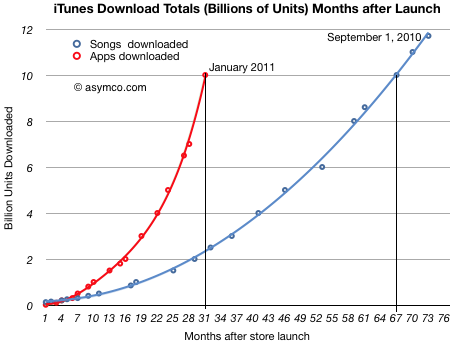
 One-on-one interview with John Hernandez
 About two years ago, I have written about the World Economic Forum and your open social web-strategy. How do you think about your approach in 2008 today?
 When I first came across the KLM Surprise idea, I thought “cool customer service”, “very modern approach” and “nice use of a Social Media campaign”. It seems KLM engages in how to make their clients happy, how to understand personalized customer service of the future and how to use social media to reach out to their clients one step ahead.