B2B Study: 69% ignore their customers’ social web feedback
05.06.2012 von Martin Meyer-Gossner
Kategorie English Content, Featured Stories, Social Media
It sounds a bit incredible, but it is still plain reality. The majority of B2B companies still ignore their clients on the social web. Most companies are not listening to their voices in Social Media to draw their conclusion out of their public feedback.
69% of B2B companies don’t give feedback to their customers input in Social Media. The missing process is the challenge for them which they cannot manage. This is the outcome of a recent study by Satmetrix.
Satmetrix is the company which is responsible for the NetPromoter score. This score measures customer satisfaction based on how likely customers are to recommend a business. Being a measurement of advocates and detractors, it might as well be seen as a mirror of business success.
The risk of ignoring still seems to be not interesting for companies if we see the latest results from this study…
- 75% of B2B companies do not measure or quantify Social Media
- 60% of B2B companies do not have an integrated social media strategy
- 56% of B2B companies who measure Social Media just count the comments and followers
- 51% of B2B companies don’t have Social Media tracking at all
- Just 4% of companies who measure social media have any form of sentiment analysis
The survey data is based on 1.180 responses from businesses around the globe, who are all part of the NetPromoter.com community.
Some months ago, Google described in a B2B study how business decision makers are making up their mind for a purchase decision. The web is the first resource when B2B decision makers are on their way to evaluate which product or solution they might buy for their company. And although studies like the one of the Aberdeen Group state that B2B companies can generate more leads when using Social Media, many companies still don’t see the link and the opportunities coming with it.
Spot On!
Somehow Social Media in B2B is not rocket-science. Somehow the challenge is to align competition, commitment, content, context and collaboration -the 5C’s of Social Bsuiness- in order to offer customers the chance to identity with the company. In our eyes, this is the only way to differentiate from your competitors. Let us know if you have good examples how companies are using Social Media in the B2B world. Looking forward to your feedback. Or if you interact as a B2B company successful on the social web, let us know and we might highlight your case in a post. Reach out to us!
How to become “The Social Enterprise”…
04.06.2012 von Martin Meyer-Gossner
Kategorie English Content, Social Business
The mighty loss in productivity often moves ROI and positive arguments in the shade when the conversation comes to social business discussions. Especially, social networking sites like Facebook, Pinterest, Twitter and the likes let managers get nervous if their employees are still working today for eight hours, or not. Or whether it is better to cut the line to social networks.
In times where almost every second employee calls a smartphone or tablet their property, all the discussion around baning social networks seem to be making less and less sense. Training and encouraging employees to benefit from social networking sounds even more appropriate. Just bear in mind how much knowledge the company could generate out of it, if the knowledge learning process is aligned to the use of social networks.
If employers see the benefit of a social business through connected workers, the digital access to the company expands and conversations around the company as well as rpducts and the brand will increase. It fosters and harnesses the ability to create leadership in different ways. Content, context and collaboration will rise. Managers just need to offer identification for consumers, differentiate from competition, and redefine commitment for employees and partners anew. Just like the Community Centric Strategy teaches them…
Gist also offers some nice recommendations how to become “The Social Enterprise” in an infographic…

Study: IBM defines four categories for digital identities
18.04.2012 von Martin Meyer-Gossner
Kategorie English Content, Featured Stories, Web Strategy
In a recent study called Beyond digital, IBM analyzed the digital behavior of 3,800 respondents in six countries (China, France, Germany, Japan, the United Kingdom and the United States).
The study explains how the digital industry changes with the evolution of the so-called “The Connected Consumer” how Saul Berman, author of the study, calls us today. Us? Well, everybody who engages online provides custom experiences, and thus the term was created. It makes clear that 78% identify themselves as digital device adopters – more than half of those read newspapers online.
Companies need to become a clearer picture of their consumers. These identify themselves as either Early Adopters 12%; Late Adopters 32%; Mainstream Consumers 35%, or Stragglers 21%. Over half of the “mainstream consumers” show a range of digital consumption behaviors. They check news onion. They watch video online. They access mobile services. They participate in social networking, or visit user-generated content sites.

IBM took a new approach to identifying the respondents in four different categories – although in my eyes categories will be difficult to hold as user cross category borders permanently these days. One of the reasons why I have created the Community Centric Strategy which I launched at the last IBM Social Business event IN Germany.
Still, the four digital personalities IBM found have more to do with their degrees of access to technology and content. Older target-group definitions like age come in second line.
The biggest group is the Efficiency Experts. They make up 41% of tech users, the largest portion of connected consumers.
The other three categories are…
Content Kings (9%) – dedicated gamers, newshounds, movie buffs, music lovers and TV fans.
Social Butterflies (15%) – have consistent access to networks, but engage with friends and family, rather than media-supplied content.
Connected Maestros (35%) – using mobile devices and Smartphone applications to access games, music, and video or to check news, weather, sports, etc.
“These respondents use digital devices and services to simplify day-to-day activities. Efficiency experts send emails rather than letters, use Facebook to communicate with others, access the Internet via mobile phones, and shop online.”
Spot On!
Companies should take a close look at the Connected Maestros as they are providing tailored customer experiences. They require brands to build insightful profiles and continually update them as consumers evolve their digital content consumption behaviors. They are eager to get to know more about brands, companies and products. Assuming they are more likely to get engaged with brands, or to become brandvangelists.
Would you agree…? Where do you see yourself?
Study: Social Media Use Helps CEOs Build Trust
05.04.2012 von Martin Meyer-Gossner
Kategorie Daily Top 3, English Content
We already know that Social Media use confers a wide variety of benefits for the average company. It can work as an effective platform for marketing a new product. It can act as a focus group to gauge consumer opinions. It can be used to reinforce brand image and community engagement on a day-to-day basis. And, for most basic uses, social media is free, easy, accessible, and convenient. From a business perspective, there’s really not much to dislike.
Now research has revealed another reason for businesses to use social media: credibility.
According to a study released recently by BRANDfog, a social media consulting firm, CEOs that use social media are perceived by consumers as more credible.
A full 82% of the respondents in the survey said that they trust a company more when its top executive actively uses and communicates via social media. Furthermore, 77% said that they were more likely to purchase a product from a business that has a socially-engaged CEO. These findings fall in line with earlier credibility studies, although they are the first to consider the CEO’s role in particular.
The strong preference given to CEO engagement is likely a testament to the power of informal, personalized communication in the digital age. In the past, an executive might have given a human face to his or her business by writing individualized letters with custom pens or by making a point to speak with small shareholders at the annual meeting. These days this appeal to personalized informality is best found on Facebook and Twitter, where the CEOs communicate just as we do and may actually respond to our individual comments or complaints.
At the same time, social media is perceived as an “honest forum” where people can speak candidly and where companies cannot stand behind layers of advertisers, consultants, and brand managers. By putting its brand message on Facebook and Twitter – and by keeping that message the same across traditional and non-traditional platforms – companies can appear more transparent and dependable. A brand message coming from the CEO only boosts that perceived transparency.
A minority of top CEOs currently use Facebook and/or Twitter to connect with consumers. Is this about to change? If companies are paying attention to this study, the answer very well may be yes.
This post is a guest post from Inkhead.
Study: Web-traffic boosts in-store sales
01.02.2012 von Martin Meyer-Gossner
Kategorie English Content, Featured Stories, Web Strategy
In a recent study the research companies comScore, Accenture and dunnhumbyUSA found some significant relevance between in-store sales and a company’s web presence. The study was based on a panel of CPG customers and one million U.S. Internet users who have given comScore explicit permission to have their online activities continuously measured and matched to their in-store brand buying behavior provided by dunnhumbyUSA.

The report comes to the conclusion that consumers who visit a website prior to their shopping experience in a company store spend 34% more with that company and 57% more on products or services based on their specific industry sector. It also states that visitors of brand websites are frequent buyers of the brand in retail stores. It shows that 42% more of these clients finish their transactions than non-visitors. Furthermore, website visitors are also heavier buyers in a brand’s product category. They are spending 53% more in their category dollars than non-visitors.
“Since website visitors have higher affinity to the brand and the overall product category, there is an opportunity for brand marketers to drive loyalty through personalizing the website experience, catering to the preferences of their best customers.”John LaRocca, Vice President, Strategic Partnerships, dunnhumbyUSA
And again another study highlights the importance of content marketing as the new emerging trend in marketing. Shoppers were more aggressive in their approach to understand and evaluate their purchases prior to their visit in shops as a result of the massive information access through the web. According to the research, content marketing plays a significant role here. So, campaigns on the web not only add value to web shopping but also -and for some companies and brands more importantly- will help to drive and boost in-store habits and sales – apart from positioning a brand’s capability.
“Marketers who create compelling (brand) website experiences for consumers are extremely effective in driving incremental and profitable in-store sales. Analysis shows that consumers visiting the best of the 10 CPG brand websites evaluated in the research study, spent over 200% more on the brand than non-visitors.” Jerry Lohse, Senior Director, Accenture Interactive
Based on the fact that Brafton reported some weeks ago that the average consumer visits more than 10 web pages before a purchase decision, this study marks an important point in the relevance between online and offline shopping. This might be catalyzed by the new opportunities that smartphones, tablets or Augmented Reality (see real-life community shopping) offer, and shows the straight relationship between the two shopping experiences which more and more merge to one close shopping cycle.
Spot On!
More companies are realizing that offering web shoppers the same information and service as in-stores will lead to more purchase at both ends of the shopping cycle: online and at offline locations. The challenge for companies is to differentiate the shopping experience by using SoLoMo (social – local – mobile). Here the question for the future will remain whether in-store shopping needs to become more of a lifestyle experience or adventure to attract more consumers to join in-store activity (see IKEA Sleepover), or wether people will want to have real people around them and thus make it a social reality world, rather than a social web world…
The Social Media Rockstars – Community Managers (Report 2012)
26.01.2012 von Martin Meyer-Gossner
Kategorie English Content, Social Media
Being a community manager in a company or a community center is the most popular position people can have in these Social Media times. Not only is this the person in charge of the engagement cycle of all Social Media topics but moreover that they become the main public touchpoint of the Social Media conversation of the brand or company, and thus their reputation becomes one of a kind of a rockstar…
Still, many brands and companies still hand over the Social Media responsibility to junior level people or trainees who then have to engage and manage their online communities. Would you say this is clever, or wouldn’t it be better to hand over the responsibility to a chief culture officer or an experienced market brain?
Socialfresh published an infographic and report data that illustrates the work, the tasks and capabilities that a community managers need to be able to cover. And these are some of the findings they provide.
Community Managers..
… commit most of their time with content, respectively online conversations
… 67% come from a brand side vs. 33% form an agency side
… are far more females than male (65% vs. 35%)
… have an average age of 30 years, however the 31-40 year olds make most money
… see more success on Facebook (52%) than any other platform
- gets an average salary of almost 62.000 USD
Ok, the salary is not rockstar-like but their chance to become one of the top 50 Social Media influencers is a sweet potential outlook…

Community Shopping on the street – NET-A-PORTER.COM’s Window Shop
26.01.2012 von Martin Meyer-Gossner
Kategorie English Content, Mobile
Augmented Reality shopping is definitely a new trend these days. NET-A-PORTER have launched their Augmented Reality Shopping Windows in different capitals around the world like Sidney, Munich, London, Paris and New York.
The following video demo comes from late last year’s Fashion Night Out celebrations in London and New York. It will be rolled out globally now for the new Karl by Karl Lagerfeld collection. Consumers need to download the NET-A-PORTER iPhone/iPad app, then visit the stores and can use the Augmented Reality like a new shopping experience.
When pointing the iPad camera at the window, this will publish 360 degree product models doing their best on a video catwalk. It also displays product information, the clothes price and obviously the ability to purchase immediately.
Isn’t this a cool idea to offer a 24/7 shopping life? These doors are always open in the future. Well, ok their online shop as well but it is a different kind of shopping experience right…? Community shopping on the street…
The Social Google: Google Search and Google+ unite
11.01.2012 von Martin Meyer-Gossner
Kategorie English Content, Featured Stories, SEO
Google revolutionized the internet, the way we interact, we use our brains and thus, somehow it changed the world. And now they will do it for the second time… with “Search, plus Your World”. This new search engine technology does not only bring us information from across the web. It proclaims to make search even better better by including photos, posts, and “more from you and your friends”.
With an all new algorithm for their search they have changed their search strategy. Today, people are searching not only for content. Today people also want to find personal and private information and touchpoints. The normal result is one which we have all expected for a long time since Google+ launched: Google+ will be integrated in Google search which will definitely affect the power of Google against their hardest social competitor Facebook.
Google’s new “Search, plus Your World” integrates also personal data like personal content, pictures or videos from Google+. Here is their new promotion video…
On the official Google blog Amit Singhal explains how the new Google search works with an experience of his past.
“As a child, my favorite fruit was Chikoo, which is exceptionally sweet and tasty. A few years back when getting a family dog, we decided to name our sweet little puppy after my favorite fruit. Over the years we have privately shared many pictures of Chikoo (our dog) with our family. To me, the query [chikoo] means two very sweet and different things, and today’s improvements give me the magical experience of finding both the Chikoos I love, right in the results page.”

Google’s first step to integrate Social Search results gets now followed by the integration of Google+ which becomes a massive hub to “socially unite” all of their own products and services. The new search offers three main benefits…
1. Personal Results, which enable you to find information just for you, such as Google+ photos and posts—both your own and those shared specifically with you, that only you will be able to see on your results page;
2. Profiles in Search, both in autocomplete and results, which enable you to immediately find people you’re close to or might be interested in following; and,
3. People and Pages, which help you find people profiles and Google+ pages related to a specific topic or area of interest, and enable you to follow them with just a few clicks. Because behind most every query is a community.
Spot On!
However, this might sound as if Google makes us more transparent, users have the opportunity to select whether they want the new Google search algorith, or not. This gives users the ability to see either the good old search results or the brand new private search results. People just need to use the little buttons…

…or they will simply change it in the account settings. And Google extends the Google+ circles idea to their search: Every single result in the private search mode gets marked whether it is private, public or limited entry. Somehow a clever filter, don’t you think…?
Social Business: 84% of businesses have not fully integrated Social Media in their operations
03.01.2012 von Martin Meyer-Gossner
Kategorie English Content, Featured Stories, Social Media

©arrow - Fotolia.com
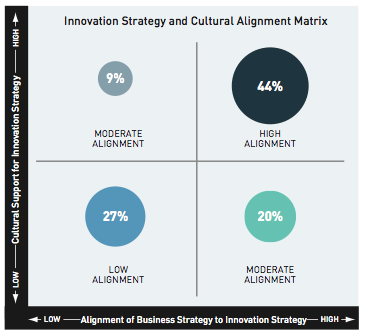
The study concludes that 27% of business executives are on the move to integrate Social Business in 2012. Moreover, another 20% are wishing that the integration of Social Media projects will increase business efficiency. As there are no reliable or established measurement and metrics standards most companies are still waiting to invest big budgets. Still, as competition is high companies start integrating social into their business to be competitive in their market.
The results of the inSites study show that most companies (69%) will invest in Social Media marketing and launch campaigns in 2012 hoping to improve online conversations and their web efforts. For now 64% of businesses have at least one person responsible for Social Media activities and platforms. With a reason: One-third are sure that Social Media is changing their operations.
Spot On!
The challenge for companies will be to set up the right Social Business strategy as it involves the right understanding of community centers as an external strategy issue. And it needs an appropriate internal company culture with social policies, social training and social commitment and the people. Apart from that, 45% of the respondents said that they cannot find the people for their Social Media efforts. The best option is to start investing in the people you have to integrate social in your business. The Community Centric Strategy could be one starting point…
2012: Think Social Business, live Community Centric Strategy
23.12.2011 von Martin Meyer-Gossner
Kategorie English Content, Featured Stories, Web Strategy
2011 was a great year for Social Business!
Social Business got the right attention and awareness. And those companies which thought that “social trend” might go away, found themselves in business meetings, workshops, seminars, webinars with me, or conferences where people gave me the honor to be the moderator. After all, the feedback was such that I can definitely summarize the 2011 Social Business success with the opening statement.
What happened in terms of Social Business in 2011 and what is the outlook for web marketers in 2012…?
Well, first of all companies spend more time and resources understanding the challenge Social Media and Social Networking from a business perspective. We got the proof that European bosses don’t have to be persuaded to see the benefits of Twitter, that Social Media is a big internal topic, and that Social Business is critical to future business success.
ROI aspects are still key for Social Business performance. Nevertheless CMO’s were often lacking the right plan even for their Social Media efforts – and often CEO’s doubt their business credibility.
Job offerings spread around Europe, although sometimes clients asked me whether the offering is correct from a capabilities point of view. Often these openings were meant to be Social Business, in terms of a team-orientated or community-centric positions, but ended up being a “one-man-show-responsibility”: the Social Media Manager – although we all know about the importance of a multi-layer framework to set up a proper Social Media strategy.
From a client perspective companies were still very much in the broadcast or advertising mode. And the perception gap could easily be made out. Although communities were their targets, and many companies and brands tried their best to generate engagement around their business, many of them were still in an advertising scenario and mindset, instead of trying to think about change management in terms of culture and people.
Ultimately, companies have a massive opportunity in 2012 to change their perspective and become Social Business driven with the right teams…
- Teams that work with customer market intelligence.
- Teams that scale the business with social commitment.
- Teams that crave content for leadership and insights.
- Teams that understand business touchpoints in new context.
- Teams that leverage synergies between companies and brands with an appropriate plan.
And these teams don’t work internal or external. These teams group together cross-channel through Community Centric Strategy by understanding the 5C’s as the engines of Social Business: Competition – Commitment – Content – Context – Collaboration.

Finally, Google+ started listing brand pages in organic search results. One of my successful posts from November appears in the first page of the organic search results (see picture last entry).

Status updates will become a game changer in the social ecosystem and boost brand awareness. If companies and brand are blogging they should consider this in their SEM/SEO and keyword strategy when posting your topics on Google+. Marketers should consider this and watch out if this should not affect Facebook and Twitter marketing activities. Maybe it is time to invest more in content marketing…
Spot On!
All roads might lead to Rom – not many to lead to a Social Business. Companies that will work with the Community Centric Strategy in 2012 can close the perception gap between consumer and customers on their journey to companies. Social Business is about people and culture. The 5C’s of the Community Centric Strategy is a new way to Rom… but it will leave the “customer chariot” at home.