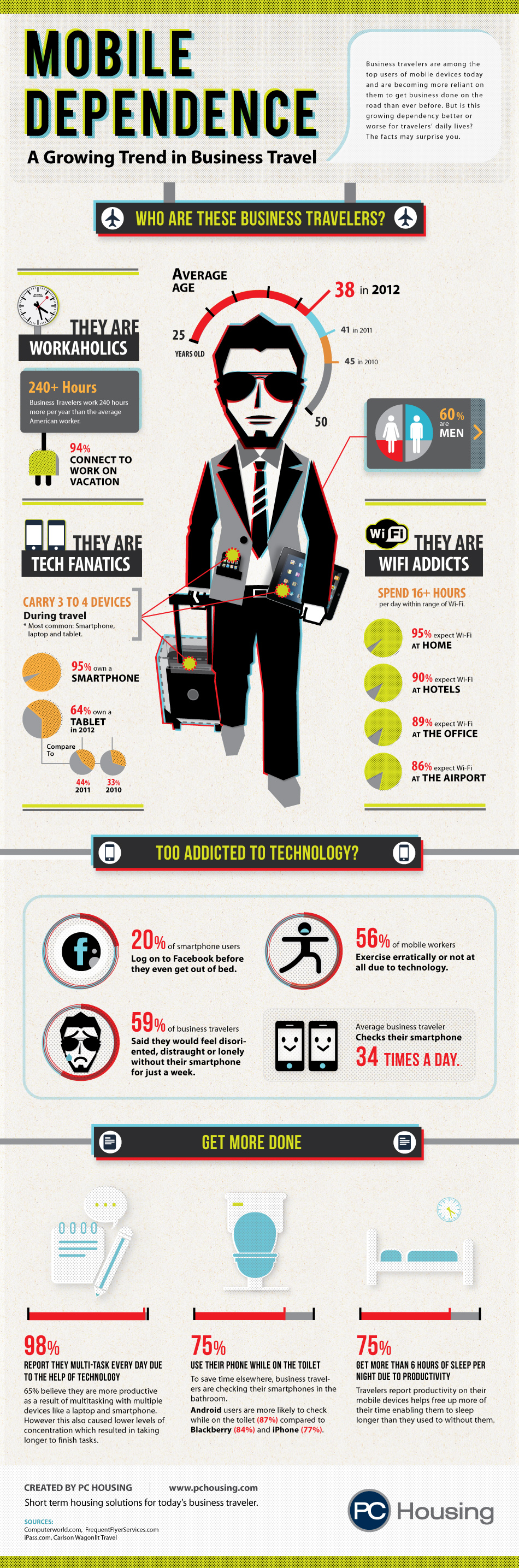
What is almost as important for business travelers as water and food? Smartphones and tablets. They are slowly placing themselves as top necessities. Being accessible at airports, at train stations, or on the tube is simply improving by mobile tools which make them the most connected power users of these tools. The question is whether mobile devices make them more effictient in their business efforts? I think they do…
https://thestrategyweb.com/wp-content/uploads/2017/11/strategywebLogo-300x139.png00The Strategy Webhttps://thestrategyweb.com/wp-content/uploads/2017/11/strategywebLogo-300x139.pngThe Strategy Web2012-05-14 16:35:162018-01-26 11:50:19Frequent traveler are the most connected worker
Have you ever paid a blogger? Paid for your content love? I mean not for writing some good PR for your business. Just for them being bloggers, sharing valueble content, thoughts, ideas, and providing new food for thought. In some days you can do that. The “Pay a Blogger Day” is here to come. Some thoughts that came to my mind with it…
Some months ago, Flattr started their outreach program to bloggers. And some months ago, they were on their way to revolutionize the monetization of blogs. Those days, the Flattr button went live on my blog, and in every post. I rewarded blog posts, and got some rewards. Just the way Flattr works. They had the idea for the “Pay a Blogger Day”.
On Flattr Cents pass from bloggers to bloggers to… Well. Companies never paid anything. They have the biggest budget pockets though. And I asked myself if bloggers want companies to engage in the monetization process, or if reputation is of higher value for them. And why should companies pay a blogger for something they produce for free. Still trying to figure that out…
Some blog posts generated some Cents immediately through Flattr, never enough for some nice ice-cream in a week though. Somehow the activity to “donate” for a well-written piece of thought or idea felt like an act of charity. Some Cents felt like a pat on the shoulder. Sometimes, I discussed with bloggers if that is encouraging, or frustrating? Every blogger argued differently about this gesture. Many were not convinced. I have seen not many buttons on blogs since.
And often when I wanted to spend some Cents, those bloggers did not use Flattr. So, my reward for them often ended in a Retweet. Maybe Retweets are the killer of positive blog comments…
The main problem many bloggers saw in Flattr was that it will be challenging to get attention for this payment theory outside the bloggosphere. Sounded like: “Bloggers will pay themselves and thus reward their work within an inner circle of the blogging community.” One of the reasons why I finally decided to remove the button from my blog.
Now, Flattr starts -in cooperation with Bambuser, Twingly and Posterous– the “Pay a Blogger Day!” on November, 29th. They intend to start a movement with the mission “Give something back to bloggers!” A good idea…
How to reward a blogger’s work?
If I may inspire you -companies, marketers and managers- with reward opportunities for bloggers, then maybe you want to read this…
a) Companies that have used shared knowledge to improve their business could write a reference quote for the blogger why and how they benefit from reading a blog. It could be a comment, tweet or a blog post on their blog. Just be creative…!
b) Managers that have used shared knowledge for their career purposes could send a present when they think the blogger has deserved it (does not need to be on the “Pay a blogger day!”). A flower (digital or real), a freebie of your products or an invite to a paid for workshop about corporate blogging. And hey, chances are high, bloggers might write about it. Just be clever…!
c) Marketers that have used shared knowledge for their campaign ideas could start thinking about whether they shovel money into a print grave, rely on TV reach or hope for radio commercial payback. Maybe they want to start sponsor a blogger who is worth it as they act like brandvangelist, testimonial or brand advocate for a brand or company. And why are not many marketers trying to make use of bloggers in the offline world? Just be curious…!
d) Followers, fans, “plusers” and bloggers that have used shared knowledge could start discussing the monetization of their work in an authentic collaborative manner. Do you want banners ads, text links, affiliate programs, brand advocate prgrams, or…? What is authentic blog monetization? Or is it reputation only? In short: money, products or reputation currency like Floout.me?
Here is how Flattr wants to inspire you to reward a blogger…
By loading the video, you agree to YouTube's privacy policy. Learn more
Think about the thoughts and then start acting! I am sure, bloggers know how to say “Thank you” and all bloggers would love to see some of these rewarding opportunities. Right…?
https://thestrategyweb.com/wp-content/uploads/2017/11/strategywebLogo-300x139.png00The Strategy Webhttps://thestrategyweb.com/wp-content/uploads/2017/11/strategywebLogo-300x139.pngThe Strategy Web2011-11-24 08:00:242011-11-24 08:00:24Pay a Blogger Day – How to reward a blogger's work?
Can we access the internet if we have nothing to drink anymore, if our water is poluted? No, we can not! Sometimes, adults should ask themselves about, and quickly start to re-think, the values that they hand over to our kids. I am happy to have spoken with mine about this topic last year around the Blog Action Day 2010…
Some weeks ago, I have written about a UK study from the London Science Museum made clear that UK people rather prefer to have sunshine and internet connection than clean water. Now, Cisco comes up with a similar study.
The Cisco study states that one in three college students and young professionals consider the Internet to be as important as fundamental human resources such as air, water, food and shelter. The study is based on the second annual Cisco Connected World Technology Report. It examines the relationship between human behaviour, the Internet and networking’s pervasiveness across 14 countries in the world (United States, Canada Mexico, Brazil, United Kingdom, France, Spain, Germany, Italy, Russia, India, China, Japan, Australia).
Mahesh Gupta, Vice-President, Business-Borderless Networks, Cisco (India and SAARC), said in a teleconference on Thursday that about 33% across the globe and 95% Indian college students and young employees admitted that Internet was as important in their lives as water, food, air and shelter. The internet has become a crucial important thing in peoples’ lives. More than half of the respondents (62% of employees and 55% of college students) said they could not live without the Internet. They see it as an “integral part of their lives”.
From a face-to-face social perspective, it is also quite amazing to see that people had indicated that Internet was more important to them than meeting with friends, dating, or listening to music. Like in the UK study, updating Facebook seems to be of the highest priority – higher than socializing. Gupta stated that within certain countries 91% of college students and 88% of employees globally had Facebook account and check it on a daily basis at least once. Furthermore, seven of 10 employees have “friended” their managers and coworkers on Facebook, and 68% follow their manager or their work colleagues on Twitter.
From a hardware point of view, mobiles rank highest as their important technology device, as high as being “the most important technology”. Two-thirds of students and 58% of employees felt that a mobile device (laptop, smartphone or tablets) was the most important technology hardware in their lives. Young employees in the UK (74%), India (71%) and Australia (66%) ranked highest when it comes to the importance of mobiles devices.
Spot On!
The study also shows some trends that other industries should watch out for. When two of five students have not bought a physical book (except textbooks) in two years, this is a clear message to the print industry. And when 2 out of 3 choose Internet connection over cars, the it becomes clear why concepts like BMW Drive Now and Smart Car2Go become popular. However, the new trends also need to be watched from a distraction point of view when being online.
Let’s hope they don’t forget to drink some water…
https://thestrategyweb.com/wp-content/uploads/2017/11/strategywebLogo-300x139.png00The Strategy Webhttps://thestrategyweb.com/wp-content/uploads/2017/11/strategywebLogo-300x139.pngThe Strategy Web2011-09-26 07:23:152011-09-26 07:23:15Studies: The internet is more important than water…?!
Yesterday, I came across a good post by Adam Singer that inspired me (as well as his comment to my comment) to finally explore a bit on the phrase: “evolution by revolution”. I don’t know whether this phrase is new, or invented by me but I would love to claim it as my invention. And as Google did not have any results on the phrase for me, I herewith put my trademark behind the phrase – maybe to make a case… “evolution by revolution”.
The phrase is one of these thesis I use for educational courses to discuss and leverage a modern social web world approach with C-level management teams in Europe. I have used it in many seminar or webinars when I was talking about the change management challenges that the Social Web, Social Networks and Social Media bring to live these days.
In the past of human kind, revolutions were often a way for the lower class or segments/departments in an organization to state their case. For them, the challenge to be heard, to get access to the higher education, to have enough food or to benefit from any other kind of wellness or upper (business) lifestyle was often only accessable by a revolution. Revolutions cost money. Revolutions are tough. Revolutions sometimes make sacrifices. Revolutions change habits, perspectives and … business objectives. And revolutions always happened publicly – via newspapers, magazines or even flyers in the streets.
Today revolutions spread faster. In our social web world today, the traditional print media opportunities are added (or replaced?) by new media formats that every individual can use to state their case. And sometimes it “pisses people off” as Adam would have put it. But it makes the case of the unhappy, unsatisfied and underdogs. Suddenly, somebody writes something that is not mainstream, not the evolution strategy of the leadership but becomes the new revolutionary fruits of growth for the management if these people listen, communicate and collaborate, if they pay attention – whether it be the clients, the partners or even employees that start the revolution.
Their voice might be found on all kinds of platforms, in a tiny revolutionary statement in a blog post, a comment in a LinkedIn group (think about the impact for B2B business) or in a Facebook fanpage. Think about it! No! Think about it! Rest…
Some companies put all their PR & marketing budgets in the effciency of search marketing but then forget about the power of blog posts, and what it could do to them. They don’t think of it as negative cases. Think positive! Think ahead! Think about how to leverage the power of social options!
Spot On!
This modern world of communication is all about humans – the past, the present and the future. Evolution follows every revolution (…in my eyes). Consumer or end user buzz for positive and negative business impact always starts an evolution whilst being embraced as revolution first. It changes the mindset. And evolutions can be positive and negative. It needs to be seen as a turn around opportunity, as a business review option, and as a way to think ahead to prevent revolutions.
“Evolution by Revolution” is a (business) challenge – not a phrase! C-level management should forget that… That’s my case!
What’s yours on this topic…?
https://thestrategyweb.com/wp-content/uploads/2017/11/strategywebLogo-300x139.png00The Strategy Webhttps://thestrategyweb.com/wp-content/uploads/2017/11/strategywebLogo-300x139.pngThe Strategy Web2011-01-21 03:17:462011-01-21 03:17:46Evolution by Revolution – a phrase or a case?
The question for marketers working with the social influencers is often how can we integrate those opinion leaders into our marketing strategy. Just found a post with 3 tips that give some guideline on how to interact with influencers to increase your marketing output.
Social Media, well… let’s says strong relationships, will make our life last longer – the same way as if we stop smoking. This is the suggestion a long-time study by the Utah’s Brigham-Young University provides. I am glad I stopped smoking and instead using my time getting engaged in the social web discussion four years ago…
“Our social relationships are important not only to our quality of life, but also our longevity. Throughout human history, we have relied on others for survival such as protection and food, and despite modern advancements that may [help with] certain aspects of survival so that we can live more independently, it appears that our relationships nonetheless still impact odds of survival,” says Dr. Julianne Holt-Lunstad
“Our social relationships are important not only to our quality of life, but also our longevity. Throughout human history, we have relied on others for survival such as protection and food, and despite modern advancements that may [help with] certain aspects of survival so that we can live more independently, it appears that our relationships nonetheless still impact odds of survival,” Holt-Lunstad
Stats on web usage are always helpful for presentations and argumentation around getting engaged in the social web with a business. This little tool taking data from the Web Index might be of some help…
Click on the button to load the content from www.globalwebindex.net.
As we can read from the stats social media usage is growing in every country. England seems to be leading the crowd. This video by SimplyZetsy provides great stats on the UK grwoth…
https://thestrategyweb.com/wp-content/uploads/2017/11/strategywebLogo-300x139.png00The Strategy Webhttps://thestrategyweb.com/wp-content/uploads/2017/11/strategywebLogo-300x139.pngThe Strategy Web2010-07-30 09:02:272018-01-26 11:58:38News Update- Best of the Day
The customer service world around us is changing with the social web, new technologies, and especially mobile apps. The question is how much this is effecting our perspective of the real offline world around us. A new technology is evolving that is beginning to connect the offline and the virtual world from a customer perspective as it will offer some new form of customer service. The term is Augmented Reality (AR).
It is a technology that brings your visual experience and information from the web or networks together, and by doing this enriches daily situations with relevant data from the web – and in more and more cases the information provided will come from the user.
The competition for users and companies has already begun. We have augmented reality browsers like Layar, explaining us instantly which famous buildings are surrounding us. Or, another AR browser named Wikitude that starts to become one of the most-wanted AR browser apps (not only for iPhone users) and gets nominated for one award after another. With wikitude.me shops and service providers of all sorts can already use this cool service to make themselves visible in the offline world by geo-tagging their office or location with simple online entries. If somebody is new in a city, this person can find a laundry or the next wine shop much easier in the future – just by using an AR browser app.
There are products like T-shirts projecting interactive games with AR. Digital cosmetic mirrors where women in cosmetic shops can see in real-time what a new eye-liner or make-up is looking good at them without testing it in reality. Adidas will launch a series of shoes, each printed with an AR code on the tongue which give you access to an interactive game that changes on a montly basis. Is this the customer service of the future?
Now, just imagine what this technology could do for customer service in the future. Wouldn’t it be a positive effect when we get immediate feedback on health information about the food and drinks we consume?
The following short film, called Augmented (Hyper)Reality, shows us a world some time ahead, where augmented reality is part of our daily offline life. We see what the actor sees, from his own perspective, and get to know the oppotunities that AR might offer to our daily life. OK, if we agree to getting networked completely…
The interesting acknowledgement for companies will be the advertising part of the film – although in some way it might be shocking…
Spot On!
The complete overkill seems to be the massive sea of logos flooding our sight in the beginning. Although the above examples might seem an exaggerated view of a futuristic branding scenario, it gives some idea on how the world might change customer care in the future. And you never know if this will be really happening, or not. Today, this all might sound strange to us but just think about how common the use of artifical medical help is for us, or how often we use the navigation system in cars today.
And then, think about the options when combining location based advertising with augmented reality. This opens a complete new world of customer care…
Don’t you think?
https://thestrategyweb.com/wp-content/uploads/2017/11/strategywebLogo-300x139.png00The Strategy Webhttps://thestrategyweb.com/wp-content/uploads/2017/11/strategywebLogo-300x139.pngThe Strategy Web2010-02-09 16:47:472018-01-26 12:08:21Augmented Reality – the future of customer service?
The difference between Facebook pages and Facebook groups is…? Well, if you still don’t have the proper answer… OK, here is one of the finest explanations by Howard Greenstein that I found on the web for those companies that evaluate on smaller or bigger interaction on Facebook.
Companies still ask what the return for investing in social media is. Beth Perdue summarizes some great suggestions from experts at the New England Xpo for Business at Boston in terms of how marketing mentality is shifting. Definitely an interesting read…
Finding good case studies for social media marketing is not easy. Del Monte Foods has created a great example in just six weeks. Adage focuses a speech by Forrester Research’s Josh Bernoff. Watch it and learn from it…
https://thestrategyweb.com/wp-content/uploads/2017/11/strategywebLogo-300x139.png00The Strategy Webhttps://thestrategyweb.com/wp-content/uploads/2017/11/strategywebLogo-300x139.pngThe Strategy Web2009-05-28 00:22:482018-01-26 12:16:42News Update – Best of the Day


 Can we access the internet if we have nothing to drink anymore, if our water is poluted? No, we can not! Sometimes, adults should ask themselves about, and quickly start to re-think, the values that they hand over to our kids. I am happy to have spoken with mine about this topic last year around the