Eine Orientierungshilfe zum weltweiten Agieren

sepiaconnectedworldIn Zeiten der Rezession sind Unternehmen gezwungen, sich der neuen Wirtschaftslage zu stellen und aktiv nach neuen Geschäftsmöglichkeiten zu suchen, wo immer sich diese bieten. Dass die globale Wirtschaft ins Stocken geraten ist, soll gewiss nicht bedeuten, dass auch die Wachstumsinitiativen von Unternehmen diesem Beispiel folgen müssen.

Unternehmen jeder Größe können sich neue internationale Märkte erschließen, wenn sie sich richtig vermarkten. Der Wunsch, sich in schwierigen Zeiten anzupassen und zu wachsen, muss jedoch von den geeigneten Tools unterstützt werden. Allzu leicht investiert man eine große Geldsumme in eine „Lösung“, ohne zu wissen, wie das tatsächliche Ergebnis dieser Investition aussieht. Vor dem Investieren beachtlicher Ressourcen im Rahmen einer internationalen Marketing-Strategie ist es wichtig, zunächst auszuprobieren, was funktioniert.

Für die meisten Verbraucher, die auf der Suche nach neuen Dienstleistungen oder Produkten sind, ist das Internet heutzutage die erste Anlaufstelle. Es versteht sich daher wohl von selbst, dass der Schlüssel für internationales Wachstum darin liegt, wie optimal ein Unternehmen die Möglichkeiten seiner Website ausschöpft.

Website-Lokalisierung und Suchmaschinenoptimierung (SEO) ist eine kostengünstige Möglichkeit zur Erschließung neuer Märkte. Es kostet nur ein paar Hundert Euro, eine einfache, textbasierte Website in einer anderen Sprache einzurichten. Obwohl die Mehrheit des Internets stark vom Englischen durchdrungen ist, ist Englisch für die Mehrheit der Internetbenutzer nicht deren Muttersprache. Hier herrscht ein klares Missverhältnis, dass Unternehmen ausschöpfen sollten.

Zuerst muss festgestellt werden, ob in einem bestimmten Land für den von Ihnen angebotenen Service überhaupt ein Bedarf besteht. Dies lässt sich am besten am Wettbewerb vor Ort ablesen. Wenn es bereits ähnliche Organisationen in diesem Markt gibt, ist dies ein gutes Zeichen, da es eine echte Nachfrage demonstriert. Hüten Sie sich jedoch vor zu vielen Mitbewerbern, da es äußerst schwierig ist, in einen bereits gesättigten Markt einzudringen.

Haben Sie festgestellt, dass tatsächlich eine Nachfrage besteht, identifizieren Sie die wichtigen Suchbegriffe, die von den Internetbenutzern der Region verwendet werden. Google und Yahoo bieten einige kostenfreie Tools zur Keyword-Bestimmung an, über die Sie diejenigen Suchbegriffe erfahren, die im gewünschten Auslandsmarkt verwendet werden.

Diese wichtigen Ausdrücke sollten anschließend in eine professionell übersetzte Website eingebettet werden, um organisch die Ranking-Position dieser Website in den Suchmaschinen zu optimieren. Es ist möglich, in ausländischen Suchmaschinen-Rankings ziemlich rasch aufzusteigen, ganz einfach deshalb, weil die Sättigung der wichtigen Suchbegriffe in anderen Sprachen als im Englischen bei weitem geringer ist.

Um das Ganze ins Rollen zu bringen, können Sie das Abrechnungsmodell Pay per Click (PPC) oder Internet-Werbung, wie zum Beispiel AdWords von Google, nutzen. So erhöhen Sie durch einen „gesponserten Link“ den Datenverkehr auf Ihrer Website. Das Schöne an PPC ist, dass Sie Ihr Budget im Voraus festlegen können – selbst eine unerhebliche Summe von €5, falls dies gewünscht ist. Sie können den Wert von PPC einschätzen, ohne große Summen investieren zu müssen. Das Risiko ist also wirklich minimal.

Wie bereits erwähnt, hat sich Englisch zur globalen Handelssprache und zur Verkehrssprache des Internets entwickelt. Man sollte sich aber klar machen, dass drei Viertel der Weltbevölkerung überhaupt kein Englisch spricht.

Die Notwendigkeit, dass Unternehmen ihre internationalen Konsumenten in ihrer jeweiligen Muttersprache ansprechen, kann daher nicht genug betont werden. Wenn auch Englisch die am weitesten verbreitete erste Fremdsprache ist, bleibt es eine Tatsache, dass die meisten Verbraucher zuerst in ihrer eigenen Muttersprache nach Dienstleistungen/ Produkten suchen.

Ein Unternehmen, das geschäftlich weltweit agieren will, muss also in der Lage sein, in jedem Land „wie ein Einheimischer zu denken“. Das heißt, Sie müssen die Vielzahl kultureller und linguistischer Vielschichtigkeiten berücksichtigen, denen Sie begegnen, wenn Sie in neue ausländische Märkte eindringen wollen.

Nehmen wir zum Beispiel die französische Sprache in Frankreich und Kanada (Québecer Französisch). Sie ist weitgehend identisch, aber dennoch gibt es hinreichende dialektische Unterschiede zwischen diesen Ausprägungen des Französischen, so dass für ein gezieltes Ansprechen jedes Marktes gesonderte Marketing-Strategien notwendig sind.

Um dies an einem Beispiel zu verdeutlichen: „E-Mail“ heißt in Frankreich schlichtweg email, in Kanada jedoch courrier électronique (wörtlich: „elektronische Post“). Und während ein déjeuner in Frankreich „Mittagessen“ bedeutet, meint man damit in Belgien und in der Schweiz das „Frühstück“.

Es gibt zahlreiche solcher Unterschiede zwischen den französischen Sprachvarianten in Frankreich, Kanada, Belgien und der Schweiz, die die Bedeutung des richtigen Lokalisierens Ihrer Dienstleistungen für jeden speziellen Zielmarkt hervorheben. Gleichermaßen verhält es sich auch mit den Sprachen Deutsch (Deutschland)/Schweizerdeutsch, Portugiesisch (Portugal)/Brasilianisches Portugiesisch, Spanisch (Spanien)/Lateinamerikanisches Spanisch und, ganz in der Nähe, Britisches und US-amerikanisches Englisch.

Sprachen spielen daher im Globalisierungsprozess eine zentrale Rolle. Unternehmen jeder Größe könnten von Website-Lokalisierung und SEO profitieren. Eine Firma in den eigenen vier Wänden kann mit nichts weiter als einem vernetzten PC und etwas unternehmerischer Intelligenz weltweit agieren, ohne dafür Unsummen zu investieren.

Christian ArnoÜber den Autor
Gastautor Christian Arno ist Geschäftsführer und Gründer des internationalen Übersetzungsunternehmens Lingo24.

Das im Jahr 2001 gegründete Unternehmen ist auf vier Kontinenten für Kunden in über 60 Ländern tätig. Im vergangenen Jahr hat Lingo24 mehr als 30 Millionen Wörter für Unternehmen aus jedem Branchensektor übersetzt. Im Jahr 2009 betrugen die Einkünfte des Unternehmens €4 Mio.

2010: Online ROI – a challenge for companies

mausThe solution to the following question is complex: How should companies measure online ROI in future? In times of display, affiliate and search advertising the measure of success has been kept very simple. Page impressions, clicks, leads, sales – that was it. With the evolution of social media the topic of online measurement has become more complex.

In the Pre-Web 2.0 era, there was a formula that has put everything else into the shadows. It was based on the clic. Obviously still many CMOs see this as the crucial measurement factor of their online activities. The click was considered the basis of the digital marketing manifesto.

The formula of the previous online ROI went something like this…

Page impressions and clicks to convert click-through rate that generates leads and ultimately (hopefully) sales.

And this formula also corresponded to the value in the online marketing of cost-per-mile (CMP), cost-per-click (CPC), cost-per-lead (CPL), cost-per-sale (CPO). Simple, clear, pragmatic.

Marketers were satisfied, the sales man less (mostly) due to inferior leads and associated fluctuating revenues. There was a lack of transparency. The management is considered to be overstretched. 2010 everything will be different.

In 2009, the main German association for publishers and buyers, the IVW, killed the power of the page impression, the visit is the ‘Golden Surfer’ from now on. An English study by the Online Publishers Association (OPA) is following suit and strengthens the effectiveness of the ’silent click’ and the value of the context.

Moreover Eyeblaster invents, and especially Dean Donaldson promotes this, the Dwell Time. Efficiency measurement of web activity becomes a challenge for companies. And if we take it to the top companies do need an eye-movement study to measure the time-based attention, the way we know it from the print era (similar to copy-test).

Another challenge is that there are numerous social media activities added, and here we are looking for a reliable measurement method to justify the expenses. In Germany the Association of Social Media and Social Media is quickly introducing a new currency: share of voice or share of buzz. A conceptually coherent model , but in practice is questionable in its feasibility, management and marketing relevance. A similar measure as the CTR won’t be found in the social media industry, probably still for a long time. Probably not even 2010…

Let’s illustrate the complexity of measuring social media ROI at a viral campaign, the buzz generated by social media coverage and results. Previously, the click was relevant. It was a unique short-term assessment without measurement of long-term effect. With the ended of the campaign the measurement time was over. Whether the click came from the desired target group of bookers ranked in it’s relevance secondary.

In a viral campaign, however, due to the target-transparency, the question of efficiency measurement is completely different. All these values are quite different in context and only win in their semantic and concluding statement its relevance for the advertiser.

Questions arise such as …

How much time commitment gives the user his social activities and the commitment to the company?
How do I rate detailed comments on blogs, micro-blogs or social networks?
How to evaluate an Re-Tweet in this context?
From whom are the comments and actions coming?
How does buzz spread via this person and to whom?
How relevant is the target audience about the distribution for the advertisers?
How to integrate ratings in the measurement methog on video- or evaluation platforms?
What about the statements that I can not even see, because a front door at Social Networks is obstructing my access to the results?

Without individual-subjective definion of measuring units, each company, every Social Media ROI measurement is worthless, and social media marketing measurement fortiori. The metric must be defined in the relevant context of the desired outcome best possible – in other words the individual needs of the corporate strategy or intention of each social media activity has to be adjusted from case to case. Increase in visits to the website? Generation of Fans or Followers? Couponing on a community? Knowledge on brand confessions obtained? Or actually generate online sales?

Each profile of an active social median, its social graph, in its sustainability and its recommended value of inside and outside “of his” social community has different weight. Determine where the true relevant measurement is the responsibility of the advertiser. At the Webcific I have called the new monetary views as “cost-per-commitment” to provide the relativity of the word in question and to make clear the relevance of the word, but for the future.

Commitment begins with the communication to customers and does not stop when clients order at the company’s shop. However, maintaining the commitment of campaign spending via email or traditional online activities still is essential. As customers loyalty runs outside the social media spheres, too. Defining commitment as a measure of social media may be based different on the company blog than on Facebook or Twitter.

A crucial factor in the social web is always forgotten: Traditional marketing campaigns have a beginning and an end. That’s when Social Web communication starts…

The CPI formula in times of social web might be …

Reach and engagement convert to social activities that lead to multipliers, and (probably generate) revenues from sales.

The future of online ROI measurement should be driven on the basis of how much communication output must a company deliver through a variety of social media, until the customers brand promise is gaining credibility and creates customer communications. This leads to commitment, which I have just referred to as “social activities” that need to be defined. They are the drivers of the talks for the multiplication of messages from the public relations, marketing and sales department.

Spot On!
Measuring the Social Web ROI is a long term process. Metrics from shares, posts, comments, ratings or Tweets replace the old click-metric. For the new metrics remain the web’s property, thanks to social search integration. Communication is dynamic and it may be that the pure bookmark result of yesterday, generates many social activities and conversations tomorrow.
Who dominates social communication that generates brand-vangelist peers (as I always like to call it). From anonymous platforms users become now fans, followers, blog readers and community members. They all have names that are transparent, a huge advantage of today’s web-talks. In the decisive moment, when they start participating in the discussing companies can find important multipliers of the message of a brand or a company, and therefore define important parameters. But companies should remember that communication can take place anywhere and adjust according to their web strategy. This modern weaving culture should incorporate engagement metrics or policies between sales and marketing. Otherwise, the effort of monitoring, measuring, analyzing is worth nothing, and will not meet the result of the challenge of 2010.

Dean Donaldson: Future Trends in Digital Marketing

For some years now, we have an annual meet-and-greet trend show for digital marketing in Germany. Some years it was called OMD (Online Marketing Duesseldorf), and now we have the DMEXCO. And every year, I find somebody at the conference where I think, this person is the perfect presenter or speaker (and not just all talk).

This year I had the chance to listen to and to speak with Dean Donaldson, digital strategist at Eyeblaster. Just listen carefully about the future trends of digital marketing, and don’t tell me that this man doesn’t have the talent to get somebody engaged in a discussion (or a vision).

In his 5-minutes outlook he shares his thoughts about banners on a PC (“…this is so long gone…”), about mobile phone (“…that are no longer phones…”), about bill-boards (“… that are talking to you…”) and, and, and…

And he sees the moral challenges and privacy one of the hardest things to tackle for the future …and for the internet of things.

Interested to hear what you think about his view and his thoughts…

Poll: Blogging ist die digitale Marketing-Taktik 2009

blogger-starsIn Zeiten der Rezession gibt es viel Raum für Veränderungen – vor allem in Marketingtaktiken und -budgets. Lee Odden hat hierzu 17.000 Abonnenten des Online Marketing Blogs befragt, um die aktuellen Taktiken für 2009 zu erforschen.

Web 2.0 und Social Media setzen sich immer mehr durch – allein sechs der Top 10 Taktiken fielen in den Bereich sozialer Medien. Der Poll hat aus einer Liste von 45 Trends drei vorherschende digitale Marketingtaktiken hervorgebracht: Blogging, Twitter und Suchmaschinenoptimierung (SEO).

Hier die Ergebnisse auf die Frage: “Welche 3 digitalen Marketing Channels & Taktiken stehen für Dich im Vordergrund in 2009?”

34% Blogging
29% Microblogging (Twitter)
28% Suchmaschinenoptimierung (SEO)
26% Social Network ‘Teilnahme’ (Facebook, LinkedIn)
17% Email Marketing
17% Social Media Monitoring & Outreach
14% Pay-Per-Click
12% Blogger Beziehungen
10% Video Marketing
7% Social Media Advertising

Da macht man sich natürlich erstmal Sorgen um die klassische Online-Werbeindustrie – denn wo ist Display Werbung? Oder finden sich diese Spendings jetzt in den Bereichen Blogging, Pay-Per-Click und Social Media Advertising wieder?

Wie seht Ihr das? Welche Taktik steht bei Euch im Unternehmen im Vordergrund?

Panel: Social Media & Effective Ways to Advertise

dmexco-sepiaThis week is one of the highlights in the online industry. Online industry? Well, let’s say online marketing industry… – It’s the week of the newly launched dmexco – digital marketing exposition and conference.

So, more or less all digital marketers and agencies, portal owners, online experts, media/pr consultants and interactive sales are traveling to Cologne to get the latest buzz and trends on digital marketing and sales philosophy.

In the last weeks, there has been a lot of talk about changes in the monetization of social networks like Facebook, MySpace, or Twitter – and the options for marketers to spend their budgets effectively within social networks. With the rise of social media the tables in the online marketing industry are turning and budgets will be relocated towards social media marketing.

It is no surprise that the dmexco will also be focusing on this topic – and I am feeling honored to be the host of the panel called…

“Social Media: Show me the money – effective ways to advertise”
Congress Hall – Thursday, 24th of September 2009

The panel will be having an introduction speech by Blake Chandlee, vice president and commercial director EMEA for Facebook, on the impact of social media on both consumers and advertisers – as well as both the challenges and opportunities this presents.

The panelists will be….
Joel Berger – Managing Director GSA & Northern Europe, Fox Interactive Media Germany, MySpace Germany
Alison Fennah – Executive Director, European Interactive Advertising Association (EIAA)
Tony Douglas – Innovation Manager, BMW
Tim Meier – Brand Manager, Bacardi
Felix Holzapfel – Managing Partner, conceptbakery Germany

And the challenge for the host…?
The host has to get two sides of the coin engaged in the discussion with the same intensity: the platform owners and the brand marketers. Both are depending on the success of online advertising within social media and social networks – and in some mails all panelist were very excited about the panel.

For the platform owners the main questions will be…
- What is the future of advertising space?
- Traffic, Electricity, IT for millions of users: Who is going to pay the bill…?
- From “freemium” to “premium”: Is it better to let the user pay for the service?
- Old school and new business: Will marketers monetize social media like they did it in the past with traditional media?

For the marketers the main questions will be…
- Old school and new business: Is the amount of time in telling and selling mode shifting to listening?
- Is advertising in the social media world still advertising the way we learned it?
- Concerning social media marketing budgets, are we facing a trial and error era?
- Where and how shall marketers spend digital budgets and what are successful ‘advertising’ models?
- Do companies have to realign their web-strategy before they start advertising in social media?
- Agencies and the advertising industry vs. Social Media – a cultural clash or a creative challenge?

So, there is a lot of topics to discuss. And if you have some more input, you can send us your questions during the panel to moderator@dmexco.de. Or just send me an email or comment on this blog…

Looking forward to your ideas and questions…

Ad Effectiveness – Mixing Apples & Eggs?

Sometimes you read a study and think: “Ah, this is interesting information”. So, you write about it in a News Update.

And then, you stumble upon it again, and think twice about the research. This happened to me with the ‘Ad Effectiveness study’ conducted by Forbes. And browsing through it again, my feeling was that the title of this eMarketer article reflected the result, but the study itself mixes apples and eggs in some way…

Still, the main statement of the study remains an important trend in online marketing, and is an even more important praise for the work of online publishers (yes, probably a bit self-referential for Forbes).

“Respondents were by far the least happy with ad networks, with half saying that the results did not meet expectations” (…) “Ad network spending is all about demand fulfillment while direct-to-publisher display is much aligned with the traditional advertising goals of demand creation,” said Forbes.com president and CEO Jim Spanfeller.

However, it has to be said that ‘ad networks’ is not a tactic for generating conversion. It is a supplier that offers ‘cheap space’ by bundling platforms into offers in most cases. Platform owners have a much deeper understanding of their target group and can definitely do a better consulting in terms of converting their target group into potentials for their clients. Absolutely, I agree with that statement, having done this for years…

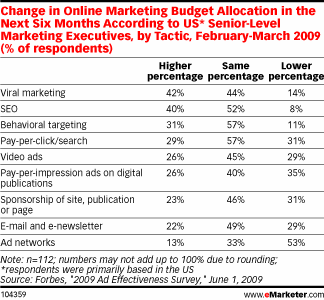
BUT: Taking my view on the study, the set up of the study is in some way irritating. When the marketing executives were asked on budget allocations the results were these…

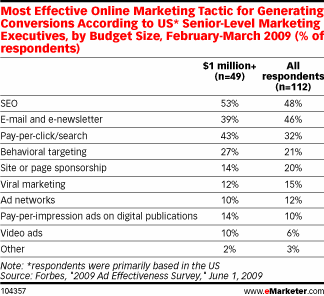
…and what they see as most effective tactics for generating conversion? Site or page sponsorship and SEO were considered the most effective ways online.

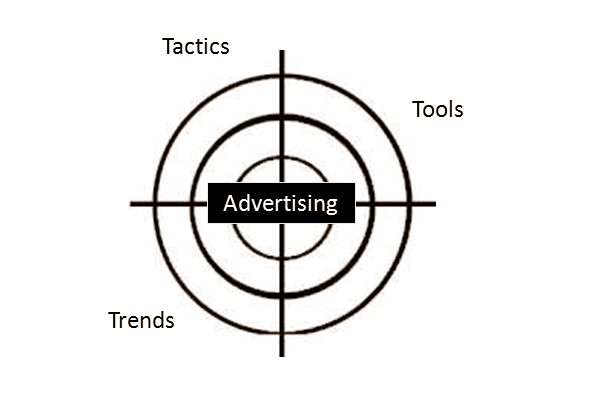
Thinking about the answering options (and bearing in mind my brand theme ‘tools, tactics, trends’) that were given to the responding marketers though, these options need to be separated from each other…

The question, I was asking myself is… Is viral marketing really an ad tactic? In my eyes it is not. It is a strategic communication tactic which integrates viral ads as some relevant online marketing tool.

So, this study set up seems to be a comparison of apple and eggs. Viral marketing is done in social networks. It is the way in which brand awareness other marketing objectives can be increased. Viral ads is the tool that may be spread like a computer virus by the users. It cannot be influenced like banner or text ads. Nor can it be bought. So, it is a modern marketing trend with little historical definition or proven success.

And, maybe such a study should think about: What can be bought by marketers, and what cannot in our times of social media.

Spot on!
The following summary is meant to make clear what steps have to be done first by marketers to create the conversation results their bosses appreciate… and it is a guideline for the chronology of setting up an online marketing strategy.

1.) Tactics
At first, marketers have to think about the tactics they can choose from…
SEO, e-mail and e-newsletter, site and page sponsorship, corporate web TV or viral marketing.

2.) Tools
Then, they have to decide on the tools that can be used to make these tactics efficient…
good texts (I am missing this most interesting option), banners, or viral ads.

3.) Trends
And finally, we have options that might create powerful conversion…
The use of ad networks, behavioral targeting and pay per ‘x’ models (x=impression, unique user, sales, click etc.)

If the online industry continues to publish studies that mix apples and eggs, it is no wonder that 57% of respondents said they still spend less than 25% of their marketing budgets online.

It is still early days in online marketing, it seems…

News Update – Best of the Day

03.06.2009 von Martin Meyer-Gossner  
Kategorie Daily Top 3

What do you think is better: web-based learning or face-to-face? A recent study of Malaysian tertiary students reveals that ‘using web-based learning technologies showed only a slight improvement in performance over conventional face-to-face teaching methods’.

Is Twitter just another tool for the inner circle of social media activist? At least it seems that this might be the fact when we hear this: Harvard Business publishes some results (300,542 users, collected in May 2009) of a study that shows… 10% of the Twitterati make 90% of the Twitter traffic – an average man is almost twice more likely to follow another man than a woman.

CMOs will change their attitude towards online marketing. According to a recent study “Ad Effectiveness Survey” released by Forbes, 53% of senior marketing executives plan to spend less on ad networks. The expectations are… Viral marketing and search engine optimization will increase in spending in the coming months, behavioral targeting spending remains steady.

“Ad network spending is all about demand fulfillment while direct-to-publisher display is much aligned with the traditional advertising goals of demand creation,” said Forbes.com president and CEO Jim Spanfeller. “It is interesting to see the shift of dollars toward demand creation as we see signs of life in the economy.”

News Update – Best of the Day

The AAAA leadership conference 2009 is over and reviewing the conference from an advertisers point of view gives you some interesting facts what the advertising industry is talking about today. Topics were…
- Trend towards online marketing is continuing. Mediavest says 50% of ad spending go to digital and interactive campaigns.
- Environmental advertising and why this is good for business…
- Can coffee companies become a retail bank? According to FT’s John Gapper this is possible for Starbucks…
- CEO of the 4As Nancy Hill on the podium talking about “incessantly negative adverbloggers.”

PS: Can great products ruin a relationships. Yes, this is possible. What a great Mino viral video Ad – and what a poor guy…


FunnyFunny Videos

Study: Agencies moving to slow for consumers?

If we can believe in a recent study ‘Beyond advertising: Choosing a Strategic Path to the Digital Consumer‘ by IBM Institute for Business Value, then ad agencies are years behind in catching up to digitally savvy consumers – although consumers are moving their media consumption online more quickly than anybody could have expected.

Now, despite the difficult economic climate there are some good news for the digital industry: IBM’s study states that interactive, measurable formats will be expected to account for 20% of global ad spending by 2012. The interviewed CMOs said they will increase interactive and online marketing spending in 2009 while 63% while 65% will decrease on traditional advertising. Generally speaking, the same trend that we acknowledged from the latest CMO report.

So, what are further interesting findings? Between 2007 and 2008 the proportion of consumers answering they used social-networking tools went up to 60% (from 33%). It even doubled for for online and portable music services to 46% and almost tripled for mobile internet. And believe it or not, the access to mobile music and video quadrupled to 35%.

Seeing these numbers, it is surprising that 80% of the interviewed ad executives forecast the industry to be at least five years away from being able to deliver whatever might be necessary in terms of cross-platform advertising, encompassing sales, delivery, measurement and analysis.

The problem seems to be the agencies according to study co-author Saul Berman, IBM global leader, strategy and change consulting services. Agencies need to identify and keep pace with the value shift in order not to loose out the same way the music industry did, he summarizes.

“To succeed — especially in the current economic environment — media companies will need to develop a new set of capabilities to support the industry’s evolving demands which include micro targeting, real-time ROI measurement and cross-platform integration,” said Saul Berman, IBM Global Leader for Strategy and Change Consulting Services, and co-author of the new study. “Now is the time for companies to move quickly to become more effective with their assets and build for the future.”

Spot On!
Watching the last decade, companies and agencies followed their customer audience and pushed their budgets to more interactive, measurable formats such as the internet and mobile (gaining 20% of the overall spend). This is not surprising as digital advertising enables advertisers to measure more effectively campaign success to prove the value of their budgets.

In terms of platform owners it shows that these need to identify new opportunities to monetize new consumer experiences before it is too late like the music industry has shown. The options are obvious: value of content, visual goods sales, value-added services plus hardware or software offerings.

For this study IBM conducted 70 interview sessions with global industry execs and surveyed more than 2,800 consumers in Australia, Germany, India, Japan, the U.K. and the U.S.

CMO report: budgets better than expected

Chief Marketing Officer (CMO) Council’s Marketing Outlook 2009 states that CMO’s see their budgets stable. Almost half of all asked CMO’s (54,1%) say their budgets will increase or at least remain.

What is the value of a click? Obviously, the best deal is transforming a consumer into a customer. For 36% this seems to be the biggest issue: converting clicks to sales and finding the value of online marketing. Just 9% of the chief marketers argue about their online performance capability as being “excellent”.

The outlook in the recession is not too bad… The majority of top marketers answered their traditional marketing focus (print, outdoor and TV) remains the same, and especially digital advertising (also social media and search marketing) will increase. But it also has to me mentioned that 45.7% said their spending budgets will decrease.

“Senior marketers are looking to hold budgets steady and not make tremendous cuts in headcounts,” said Liz Miller, the council’s VP of programming and operations. “Instead, they’re reallocating both their budget and talent into those areas that better engage and communicate with core audiences and customers.”

Spot On!
The loyalty of customer becomes more and more an issue for marketers. Who would be surprised… Those who want to study as deep as possible how the customers thinks, don’t ‘owe’ the sovereignty on customer service and support issues, nor have they big influence on CRM, the survey says.

The question remains why the majority of marketers rely on old online measures (i.e. page views and registrations 64.6%) and not focusing on more modern online engagement opportunities which keeps the consumers with the brands. The most obvious options could be personalization and client first programs (i.e. client opinion platforms or community building) which could replace the old-school “watering cans” techniques. The more companies focus on the client, the ‘happier’ the revenue lines will show.

The report was co-sponsored by Deloitte, Jigsaw and Ad-ology and asked 650 worldwide marketers.

Nächste Seite »

Get Adobe Flash playerPlugin by wpburn.com wordpress themes